

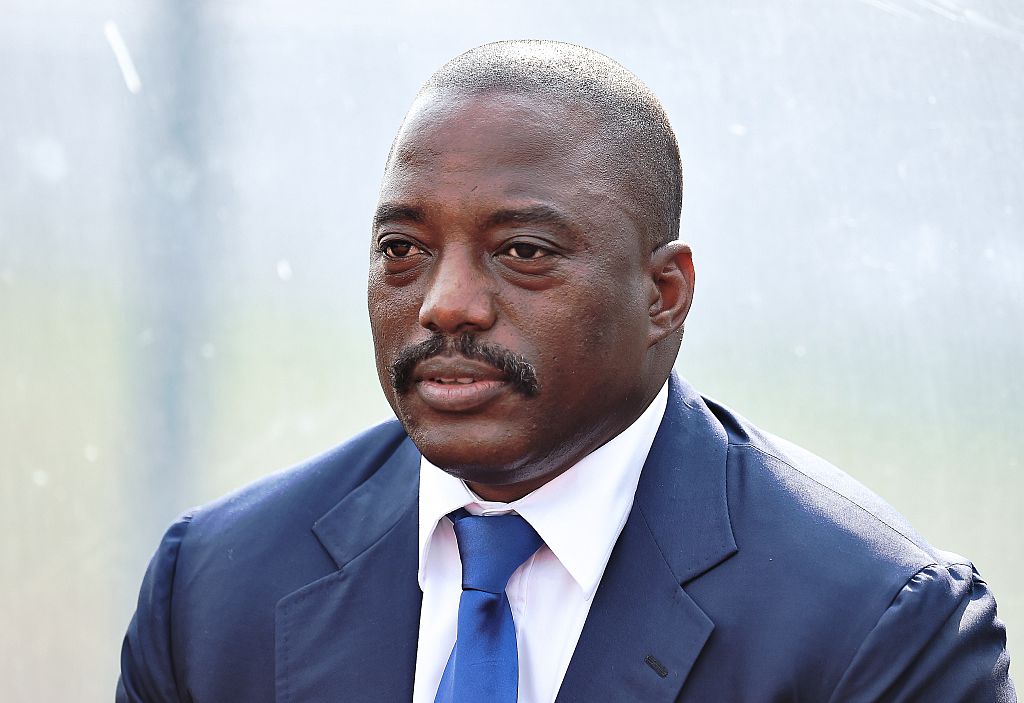
The government of the Democratic Republic of Congo has taken its most perilous step yet. On Tuesday, September 30, a military court sentenced former president Joseph Kabila to death in absentia on charges of treason, war crimes, and crimes against humanity.
It is a staggering turn of events in a country already wracked by over a hundred armed groups, secessionist tensions, and fragile governance. For a restive nation, the decision is not just extraordinary—it is reckless.
The sentence underscores a larger question: has Kinshasa, under President Félix Tshisekedi, gone rogue in its pursuit of political dominance, even at the risk of plunging Congo into deeper chaos?
Kabila: From Power Broker to Enemy of the State
Joseph Kabila’s place in Congolese politics cannot be overstated. Thrust into power in 2001 after the assassination of his father Laurent-Désiré Kabila, he ruled for 18 years before stepping down in 2019.
His handover to Tshisekedi was hailed as Congo’s first peaceful transfer of power, but beneath the surface lay a fragile pact. By 2020, disagreements over judicial appointments and control of electoral institutions splintered the alliance, setting the two men on a collision course.
In December 2023, Kabila slipped into exile in South Africa, where he briefly pursued postgraduate studies. But as the eastern conflict deepened, he resurfaced in May 2025 in the M23-controlled city of Goma.
He had been stripped of diplomatic immunity by the Senate by then after Tshisekedi’s took the smoking gun with the classic accusations: the ex-president was not only sympathetic to M23 but actively sponsoring their rebellion.
Kabila denied the charges, calling the trial arbitrary and the courts “instruments of oppression.” Yet, his fiery speeches against Tshisekedi—accusing the government of dictatorship, tribalism, and selling Congo’s mineral wealth to foreign powers—only reinforced suspicions.
The death sentence has now formalised what many feared: the rivalry has escalated into an existential confrontation.
A Dangerous Precedent in Africa
It is rare for African governments to hand down death sentences to former heads of state. History is filled with coups, assassinations, and forced exiles, but judicial executions remain exceptional.
The drastic decision in Kinshasa come on the back of numbing political developments in the region. In Uganda, opposition leader Dr Kizza Besigye has been in prison for nearly a year now, charged with treason, charges that carry the death penalty.
In Tanzania, firebrand politician Tundu Lissu is in prison facing treason charges, while in South Sudan, Riek Machar is also under detention, accused of treason.
But even when courts have been used as political tools, regimes like in Uganda where treason has been dangled on the heads of Besigye and group for years left a margin for negotiation or international pressure.
Congo’s decision, therefore, is not only radical but sets a dangerous precedent: that leaders can use capital punishment as a weapon in elite rivalries.
This raises urgent questions. Can Tshisekedi’s government truly carry out an execution against a former head of state with deep networks inside the army, the security services, and tribal militias?
The gamble is enormous. Eastern DR Congo is already a powder keg. The M23 controls Goma, Bukavu, and strategic airports.
Meanwhile, Kabila retains strong loyalty from militias in South Kivu, his home province, as well as elements within the Congolese military who once served under him.
Sentencing him to death is not merely symbolic—it risks triggering violent mobilisation. If Kabila leans into his ties with M23 and other militia coalitions, Kinshasa could face an outright civil war.
In March, M23 welcomed Kabila to their “liberated zones.” The optics of the former president standing side-by-side with rebels who hold swathes of territory are incendiary.
For Tshisekedi, the hope may be that isolating Kabila legally will delegitimise him politically. Yet, in the highly militarised landscape of Congo, it is just as likely to embolden Kabila’s allies to escalate the fight.
Even a cornered rat with turn and bite the cat. And Kabila is not a mere rat, he is too big for such games.
Kinshasa’s Rogue Turn
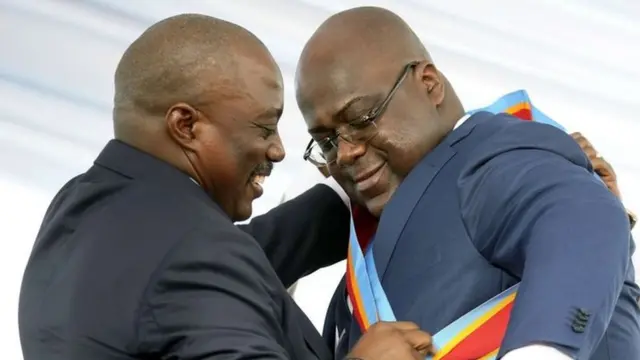
Why has Tshisekedi chosen this path? Several explanations emerge. But first, Congo's violent history. The reigns of Mobutu Sese Seko and Laurent Kabila ended violently, one fleeing to exile and the other shot dead in office.
But it is what happened before them that had Congo in the muck.
In September 1960, just a few months after Congo gained independence, Colonel Joseph-Désiré Mobutu (later Mobutu Sese Seko), then Army Chief of Staff, staged a coup that ousted Prime Minister Patrice Lumumba.
Mobutu’s move was backed by Western powers, particularly Belgium and the United States, who feared Lumumba’s alignment with the Soviet Union during the Cold War.
After the coup, Lumumba was later handed over to Katangan authorities, led by Moïse Tshombe — Katanga being the secessionist province heavily backed by Belgian mining interests.
On January 17, 1961, Lumumba was executed by firing squad in Katanga with Belgian officers and Congolese collaborators directly participating in the killing.
And now there is political desperation. Tshisekedi faces mounting criticism over his failure to contain the eastern rebellion and accusations of ceding too much control of Congo’s mineral wealth to foreign powers.
By putting Kabila on trial, he shifts blame for the crisis and reframes the conflict as one orchestrated by his predecessor.
Branding Kabila as a traitor also allows Tshisekedi to undercut any possibility of the former president returning as a political alternative or rallying figure in upcoming contests.
Meanwhile, Rwanda, accused of backing M23, remains Tshisekedi’s chief adversary. By tying Kabila to M23, Kinshasa strengthens its narrative in international forums: Congo is under attack by Rwanda with the complicity of a disgraced ex-leader.
But in pursuing these goals, Kinshasa has veered into dangerous territory. Courts appear weaponised, due process undermined, and political competition criminalised. This is the “rogue state” image Congo risks projecting—where power struggles at the top override national stability.
History shows that turning judicial systems into weapons against political rivals rarely ends well.
In Nigeria, Olusegun Obasanjo was sentenced to death in 1995 under General Sani Abacha’s dictatorship, only to be released after Abacha’s death. Obasanjo returned and later became president, reshaping Nigerian politics.
In Ethiopia, Mengistu Haile Mariam was sentenced to death in absentia in 2008 for genocide but remains in exile in Zimbabwe. Addis Ababa has never enforced the ruling, largely out of political pragmatism.
In Ghana, former leaders have faced trials and coups, but reconciliation—rather than execution—eventually prevailed as the path toward political stability.
The pattern is clear: death sentences on former leaders are almost never enforced, because their enforcement risks tearing the nation apart. Instead, they serve as tools of intimidation, bargaining, or symbolic justice.
Congo appears to have followed this playbook—but in a much more volatile playground.
Could Kabila Really Be Executed?
Practically speaking, executing Kabila would be near impossible. He is not in government custody, but in rebel-held territory where Kinshasa lacks control. Any attempt to seize him could trigger large-scale fighting.
Moreover, the international community is unlikely to tolerate such an act. The death penalty is already controversial; executing a former head of state in a fragile democracy would spark global condemnation, sanctions, and likely isolation of Kinshasa.
Yet even without actual enforcement, the ruling carries weight. It signals to Kabila’s supporters that the political arena is closed, leaving rebellion or secession as the only options. And it signals to other Congolese elites that loyalty to Tshisekedi is the only path to survival.
The stakes could not be higher. Eastern Congo already resembles a semi-autonomous zone under M23, complete with its own governance structures. The central government’s writ barely extends beyond Kinshasa. In this fragile landscape, turning political rivals into enemies of the state risks tipping the balance.
Joseph Kabila may never be executed. But the mere act of sentencing him to death could spark a spiral of retaliation, militarisation, and fragmentation. The move represents not strength but desperation—an admission that Kinshasa cannot manage dissent within democratic norms.
In going rogue, Tshisekedi may have overplayed his hand. For Congo’s long-suffering population, the danger is that this gamble could once again sacrifice peace on the altar of power.
